Best AI Research Tools for Freelancers in 2026
Conducting thorough competitor teardowns, technical discovery, and industry benchmarking used to take 20 hours of manual web scraping. Modern AI research tools synthesize live web sources, PDFs, and citations in minutes.
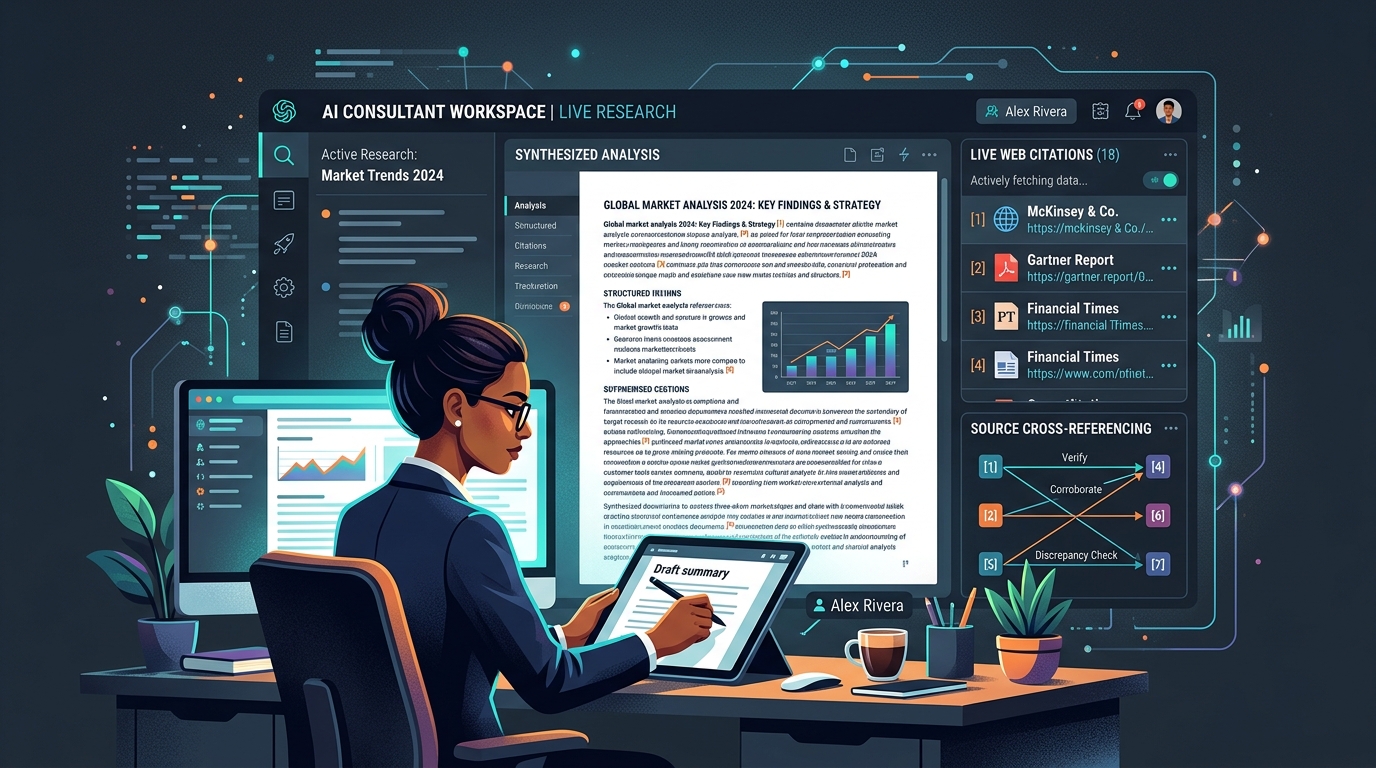
TABLE OF CONTENTS (9 SECTIONS)TAP TO EXPAND
- The Shift from Manual Scraping to Grounded AI Research
- Quick Comparison: Best AI Research Engines for Freelancers
- How We Evaluated AI Research Tools
- 1. Perplexity Pro — The Best Real-Time Web Research Engine
- Key Capabilities
- 2. Google NotebookLM — The Ultimate Free Private Document Brain
- Why Freelancers Call It “Magic”
- 3. Claude 3.5 Sonnet — Best for Complex Synthesis & Strategic Frameworks
- How Freelancers Should Verify AI Research Before Sending It to a Client
The Shift from Manual Scraping to Grounded AI Research
Before bidding on a $15,000 consulting engagement or designing an enterprise software architecture, you have to do your homework:
- What are the client’s top three competitors doing?
- What are the latest compliance changes in their specific industry?
- What are the customer sentiment patterns in their online user reviews?
Historically, answering these questions meant opening 45 browser tabs, wading through SEO spam, reading 100-page PDF annual reports, and manually copying statistics into a scratchpad.
Modern AI research tools for freelancers compress this multi-day process into a focused 30-minute discovery sprint. Rather than relying on outdated training memory, dedicated research engines search the live web, synthesize complex documents, and cite every source with verifiable hyperlinks.
Quick Comparison: Best AI Research Engines for Freelancers
| Tool | Primary Strength | Free Tier | Web Grounding | PDF / Document Synthesis | Inline Citations |
|---|---|---|---|---|---|
| Perplexity Pro | Live Web Deep Research | Generous Free | Live Web (Multi-source) | Up to 25MB Files | Clickable Inline |
| Google NotebookLM | Private Document Synthesis | 100% Free | Uploaded Sources Only | 50 Sources (500k words each) | Exact Page Footnotes |
| Claude Pro | Long-form Analysis & Logic | Free / $20/mo | Web Search (Select tiers) | 200k Token Context Window | Context-based |
| ChatGPT Plus | Deep Research Agent & Search | Free / $20/mo | Live Search & Deep Mode | High capacity | Web Links |
| Gemini Advanced | Google Workspace Integration | Free / $20/mo | Live Google Index | 1M - 2M Token Window | Grounded Links |
| You.com | Multi-Agent Custom Research | Free / $20/mo | Custom Web Modes | Document uploads | Inline Sources |
How We Evaluated AI Research Tools
- Source Verifiability & Citation Accuracy: Does the tool provide direct, clickable links to reputable original sources, or does it fabricate URLs?
- Document Ingestion Capacity: Can it read a 120-page RFP document, architectural specification, or spreadsheet without truncating context?
- Hallucination Resistance: How reliably does the model admit when information is unavailable rather than inventing plausible-sounding statistics?
- Data Privacy for Client Work: Does the vendor guarantee that private client briefs and proprietary code will not be used to train future public foundation models?
- Practical Freelance ROI: Does the tool accelerate billable client output while preserving rigorous analytical standards?
1. Perplexity Pro — The Best Real-Time Web Research Engine
Perplexity has replaced traditional search engines for thousands of independent consultants and researchers.
Key Capabilities
- Pro Search & Deep Research: Perplexity breaks complex multi-part queries into sub-questions, executes dozens of parallel web searches, scrapes live data, and synthesizes a comprehensive report.
- Granular Focus Modes: Restrict searches specifically to Academic Papers, Writing/Analysis, YouTube Transcripts, or the Full Web.
- Clickable Footnotes: Every fact, number, and company name is linked to its exact web source, making fact-checking instantaneous.
- Pricing: Excellent free tier with standard Pro searches; Perplexity Pro is $20/month for unlimited advanced reasoning models (Claude 3.5 Sonnet, GPT-4o, and Deep Research).
2. Google NotebookLM — The Ultimate Free Private Document Brain
If your client hands you a messy zip file containing 15 PDF whitepapers, 4 strategy spreadsheets, and 6 meeting transcripts, NotebookLM is by far the most powerful analysis tool available.
Why Freelancers Call It “Magic”
- Zero Hallucination Source Grounding: NotebookLM answers questions strictly from the documents you upload. If the answer is not in your sources, it explicitly tells you.
- Massive Document Allowance: Upload up to 50 individual sources per notebook, with each source containing up to 500,000 words.
- Audio Overviews (Podcast Generation): Generates a 10-minute AI conversation between two hosts discussing and breaking down your uploaded documents—perfect for digesting complex client briefs during your morning commute.
- 100% Free: Built on Google’s Gemini infrastructure and currently free to use.
3. Claude 3.5 Sonnet — Best for Complex Synthesis & Strategic Frameworks
While Perplexity excels at finding new information on the web, Anthropic’s Claude stands out for synthesizing complex technical and business ideas into polished deliverables. Check out our in-depth Claude Pro vs. ChatGPT Plus comparison for detailed coding and reasoning benchmarks.
How Freelancers Should Verify AI Research Before Sending It to a Client
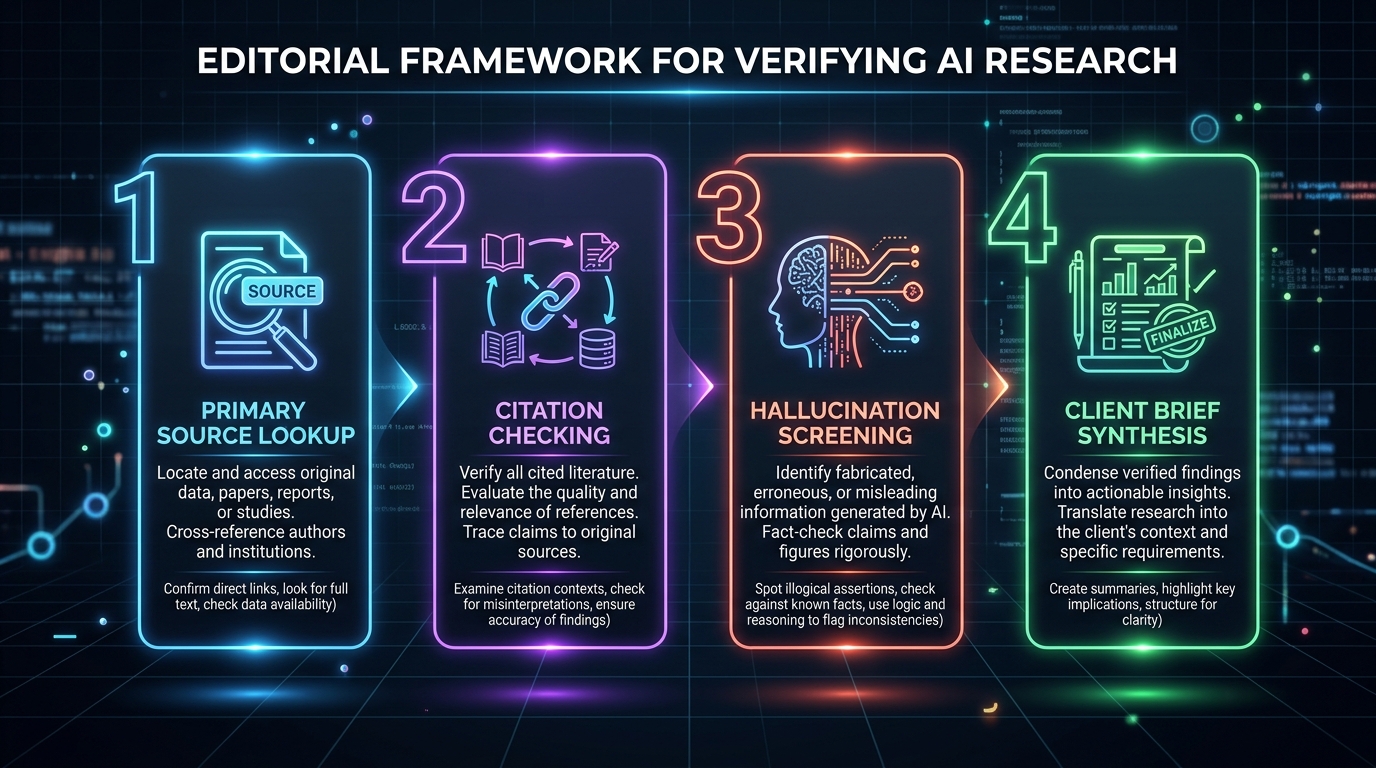
The Golden Rule of AI Consulting: You are 100% legally and professionally liable for every claim, statistic, and recommendation in your client deliverables. Clients hire you for your judgment, not for an unvetted chatbot output.
Follow this 4-step verification protocol for any AI-assisted research:
Step 1: THE 3-CLICK SOURCE AUDIT
Click the footnote citations provided by the AI. Verify that the primary
source actually exists and that the author's original methodology supports
the AI's summary.

Step 2: DATE & RECENCY SCRUB
Verify that market sizing numbers and pricing figures reflect current 2026
data rather than outdated pre-2022 archives.

Step 3: SANITY-CHECK NUMERICAL RATIOS
If an AI report claims a market grew by "8,400% in 12 months," calculate
the math manually. LLMs are notoriously prone to token-level math glitches.

Step 4: APPLY REAL-WORLD FREELANCE CONTEXT
Add your professional commentary: explain *why* this data matters to your
client's specific budget, tech stack, or customer demographic.
By coupling the speed of AI research engines with rigorous human quality control, you can deliver comprehensive market audits in a fraction of the time while protecting your reputation as an elite independent expert.
WHAT WE APPRECIATED (PROS)
- ✓Cuts competitive analysis and discovery research time by 60-80%
- ✓Provides clickable inline source citations for rapid manual verification
- ✓Synthesizes multi-hundred-page client PDF documentation and annual reports
- ✓Uncovers niche industry statistics, market sizing, and regulatory trends
DRAWBACKS & FRICTION (CONS)
- ✕Generative engines can still misinterpret complex technical whitepapers
- ✕Requires strict manual fact-checking before presenting data in client deliverables
- ✕Uploading sensitive client trade secrets requires verifying zero-training privacy terms
Best AI Research Tools for Freelancers in 2026 Rating Breakdown
Independent consultants, freelance copywriters, market researchers, software architects, and brand strategists compiling client intelligence.
Perplexity Pro is the premier real-time web research engine with verified inline citations, while Google NotebookLM is an exceptional tool for analyzing private client PDFs, transcripts, and internal documentation without hallucination risks.
EVALUATION METRICS
Speed of setup, friction in daily operations, and intuitive mental model for non-enterprise users.
Utility of capabilities without unnecessary enterprise bloat that slows down solo execution.
Return on investment for a single seat, clear billing tiers, and fair feature gates.
Uptime track record, offline resilience, and friction-free portable data export.
Specific suitability for client collaboration, single-seat economics, and lean overhead.
Frequently Asked Questions
How is an AI research tool different from standard ChatGPT or Claude conversational chat?+
Standard conversational LLMs rely primarily on their static pre-trained weights, which can hallucinate outdated statistics. Dedicated AI research tools (like Perplexity and NotebookLM) perform real-time retrieval-augmented generation (RAG), querying live web sources or your uploaded private documents and providing explicit citations for every claim.
Is NotebookLM safe for confidential client documents?+
Google's NotebookLM states in its enterprise privacy terms that data uploaded to your private notebooks is not used to train Google's public AI models, making it far safer for consulting documentation than unvetted public chatbots.
Can I use AI research to write client deliverables directly?+
AI should be your research assistant, not your ghostwriter. Use AI research tools to gather source links, extract data tables, and identify industry trends, but write the strategic synthesis and recommendations in your own expert voice.

Freelance Tool Guide Team
The editorial team behind Freelance Tool Guide, independently researching and testing software for freelancers and small teams.
More Independent Software Analyses

Best AI Tools for Freelancers in 2026: Tools That Actually Save Time
Cut through AI hype. Here are the top generative AI and automation tools that actually boost solo freelance output without introducing sloppy hallucinations.
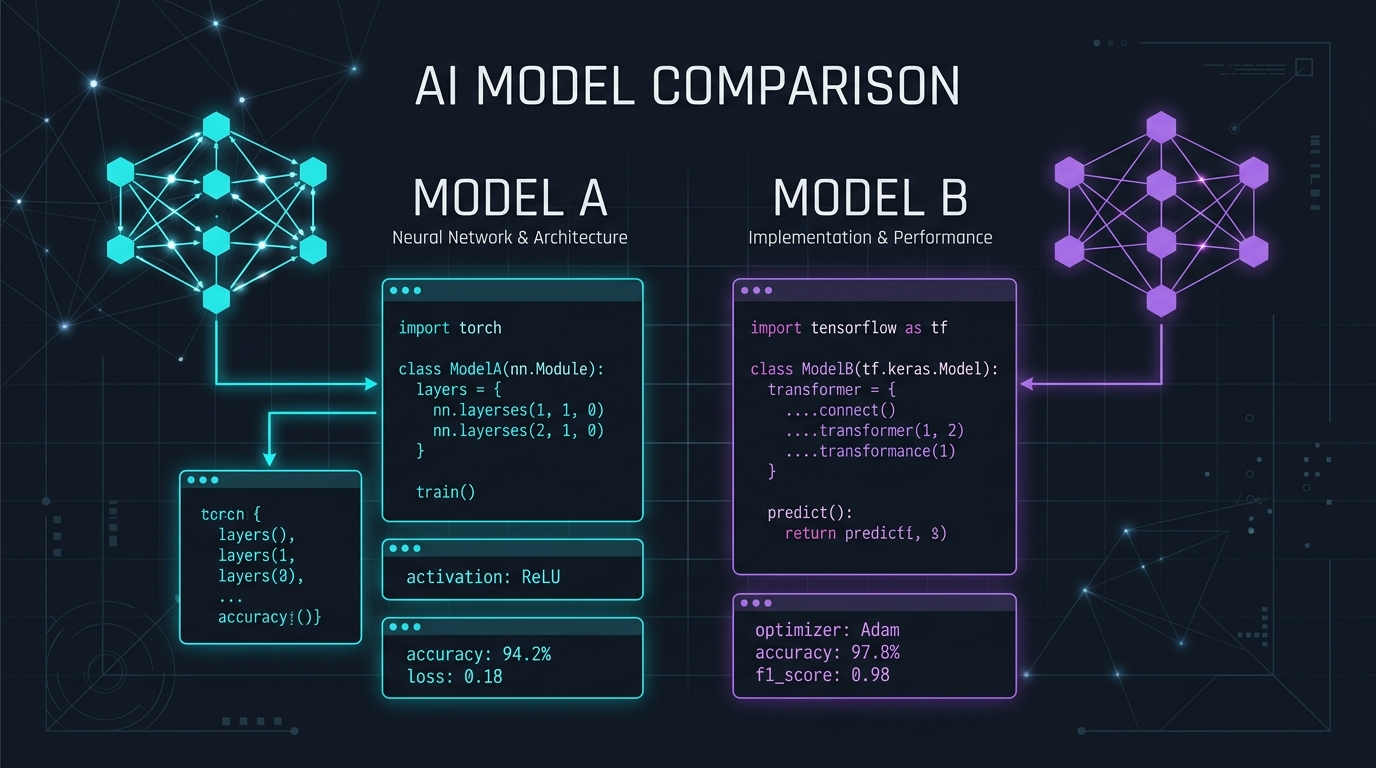
Claude Pro vs ChatGPT Plus: Which AI Subscription Delivers the Highest Freelance ROI?
We pitted Claude 3.7 Sonnet against ChatGPT Plus across technical coding, client proposal drafting, and deep market research. Here is the definitive winner.

How to Use AI for Freelance Lead Generation (Without Sounding Like a Bot)
Stop sending generic 'Dear Sir/Madam' emails. Learn the precise workflow for using AI to research prospects and draft hyper-personalized freelance cold pitches.